Pages

.

Affichage des articles dont le libellé est food preservation. Afficher tous les articles

Preserving the Harvest...Prairie Style


Our summers are short but wonderful. The days are hot, the skies are blue and the sweet smell of gardens and fields fills the air. I have a little garden but it is mostly herbs, rhubarb and a few tomatoes for the table. I buy at the Farmers' Market to enjoy that summer flavour.


I grew up in a home where we traditionally preserved B.C. fruit, garden vegetables, butchered meats and freshly caught northern lake fish for the winter. I always wished we had a cold room. Even as a young person in high school I was intensely interested in fresh local food and foraging for berries and other edibles.


Farm life back then assured us that we would have all that.


This year I am preserving a few things. I don't use a lot but I cannot help myself when I see the beautiful stone fruits, pickling cucumbers and local berries. These can be the beginning of an even greater meal. A little black currant jam added to pan juices of a roast duck takes the sauce to the next level. Apricot jam has varied applications in the baking world. This is my justification for adding to my cold room collection.


In addition to these recipes, I have blanched and frozen green beans. Saskatoon berries are in the freezer. I have cured fresh garlic from Anna at The Garlic Garden in Yorkton. Last year I had her fresh garlic throughout the winter and up until the new harvest. I keep it in a basket that I hang on the wall of my cold room. I buy potatoes to store in the cold room. Now I wish I had a root cellar! One day.


This fall or early winter I do expect that I will be gifted some wild pheasant. Last year was my first time plucking and cleaning pheasant! I was sorely unprepared but a quick lesson from the hunter set me in the right direction. Pheasant makes the loveliest clear consommé.


I had a lot of hot peppers from the market that I could not eat quickly so I have pickled them. They will be great in sandwiches. Yum.


Apricot Jam


This is a simple recipe but just bursting with flavour. It has quickly become my favourite jam for toast.


8 c. coarsely chopped apricots


4 c. sugar


1 c. honey


juice and grated peel of 1 orange


1/8 tsp. salt


Combine all ingredients in a Dutch oven. Bring to a boil.
Cook, stirring frequently until thick, about 30 minutes. Pour into hot
sterilized jars, leaving 1/4 inch headspace. Wipe jar rims thoroughly. Seal and
process in a boiling water bath for 10 minutes (or more depending upon
altitude). Yield: about 8 cups.


Chokecherry Jelly   recipe from Bernardin


When I was a teenager we would drive to the hills and seek out locations where we might score a good amount of chokecherries. They have a unique puckery flavour that translates well into jelly, jam and syrup. I could never get the recipe right back then. They have no natural pectin and there was no real recipe. The farm women just knew how to make it. I should have planted myself in my favourite cook's kitchen and documented her recipe. Regrets!


This produced a very soft jelly. I see there is no lemon juice in the recipe. Next time I would add 2 tbsp. bottled lemon juice. Bottled lemon juice has a consistent acidity level as compared to the fresh fruit that can vary.


12 cups (3000 ml) chokecherries

3 cups (750 ml) water 


6 1/2 cups (1875 ml) granulated sugar

2 pouches (170 ml) BERNARDIN® Liquid Pectin


Wash and remove stems from fruit. Combine with water in a stainless
steel saucepan and bring to a boil. Reduce heat, cover and boil gently
15 minutes. Remove from heat.


Pour prepared mixture into dampened jelly bag or cheese cloth-lined
sieve suspended over a deep container. Let drip to collect juice. For
quicker results, squeeze bag; juice may be cloudy.


Measure 3 cups (750 ml) chokecherry juice into a large, deep
stainless steel saucepan. Stir in sugar and 1/2 tsp (2 ml) butter or
vegetable oil to reduce foaming. Over high heat, bring mixture to a full
rolling boil. Stirring constantly, boil hard 1 minute. Remove from
heat.


Immediately stir in Liquid Pectin, mixing well. Skim foam. Ladle
into prepared jelly jars and water bath process. Makes about 6 - 250 mL
jars.


Bread 'n Butter Pickles   recipe from Bernardin


Last week after the Market ended a man from one of the Hutterite
colonies gave me 3 bags of pickling cucumbers. How could I
refuse?


My mother always made bread 'n butter pickles. We loved them. I have never tried making them until now. I cannot ever remember her looking at a recipe book and she always sang while she made them. Slicing cucumbers give a lot of time for reflection and I realized that this simple act of making pickles formed a connection with my mother that was never possible when she was alive. She suffered with schizophrenia most of my life. Relationships were not her strength.


6 1/2 lb (3 kg) pickling cucumbers


1 lb. (454 gm) onions, sliced 1/4 inch (0.5 cm) thick


1/3 c. (75 mL) pickling salt


5 c. ( 1250 mL) white vinegar


1 1/4 c. (300 mL) white sugar


1/2 c. (125 mL) pickling spice


2 tbsp. ( 30 mL) celery seed


2 tsp. (10 mL) ground ginger


1 tsp. (5 mL) ground turmeric


Slice unpeeled washed cucumbers 1/4 inch (0.5 cm) thick,
discard ends. In a large glass or stainless steel container, layer cucumbers
and onions, lightly sprinkling each layer with salt. Cover and let stand 15
minutes.


Combine vinegar, sugar, pickling spice, celery seed, ginger
and turmeric in a large stainless steel saucepan. Cover and bring to a boil.
Reduce heat and boil gently 15 minutes.


Drian vegetables, add to pickling liquid. Mix well. Return
mixture to a boil.


Yield – 7 x 500 mL jars


Hot Cucumber Relish   


Three bags are a lot of cucumbers. I needed to make something else. This recipe for cucumber relish looked good and might be nice on hotdogs and hamburgers. We have a block party coming up. I will test this on my neighbours!


7 c. peeled, finely chopped cucumbers


3 c. finely chopped red peppers


1 c. finely chopped hot banana peppers


2 c. finely chopped green peppers


1 c. finely chopped onion


2 c. finely chopped celery


1/2 c. pickling salt


2 1/4 c. sugar


3 c. white vinegar


3 tbsp. celery seed


3 tbsp. mustard seed


Combine prepared measured cucumbers, red peppers, hot peppers, green peppers, onion and celery with pickling salt in a large glass or stainless steel container. Cover and let stand 4 hours.


Drain vegetable mixture through cheesecloth lined sieve. Rinse with water, drain again squeezing out excess liquid.


Combine sugar, vinegar, celery seed and mustard in a large stainless steel sauce pan. Mix well. Bring to a boil. Add vegetables. Stirring frequently, return to a bil and boil gently 10 minutes.


Yield: about 6 - 500 mL jars.


This is my contribution this month for The Canadian Food Experience Project, the brainchild of Valerie at A Canadian Foodie. This is the 5th
edition of a yearlong project. You can find posts from other  participants here.


Pickled Peppers recipe can be found here


My previous posts in this challenge can be found here -


My Earliest Memory of Canadian Food

Regional Canadian Food - SW Saskatchewan 

Local Food Heroes 

My Cherished Canadian Recipe - Saskatoon Berry Pie 


reade more... Résuméabuiyad

20 Mile Dinner

I have duck breast in my freezer along with vegetables from my garden.  In keeping with the theme of the 100-mile diet, I am enjoying a 20 mile dinner tonight.


The duck breast is from one of the local Hutterite colonies.  The legs were used for confit.  These yellow beans were from the Farmer's Market and I grilled them before freezing.  The sauce for the duck is red wine poached rhubarb that was water bath canned.  I only had to go as far as my freezer and cold room for this satisfying meal tonight.
reade more... Résuméabuiyad

September Daring Cooks Challenge

I have been canning food for a number of years.  Actually, I have been canning and freezing food since I was a teenager or younger.  You see, I grew up on a farm.  That is what we did.


We had a garden and froze all the vegetables.  And we would always buy B.C. fruit by the case and would can peaches, pears, apricots and cherries every year.  Then we would go out and pick saskatoon berries and chokecherries to make more preserves.  If we could get our hands on any, we would also try to make crabapple jelly.  Actually in the really old days, before I got involved, my mother would can vegetables and chicken.  And that was before the days of pressure canners!  Scary, eh?


The September 2010 Daring Cooks’ challenge was hosted by John of Eat4Fun. John chose to challenge The Daring Cooks to learn about food preservation, mainly in the form of canning and freezing. He challenged everyone to make a recipe and preserve it. John’s source for food preservation information was from The National Center for Home Food Preservation.


I want to show you what I have done this season - Spiced Pear Butter and Blackberry Jam.


I posted my recipe for Strawberry Balsamic Black  Pepper Strawberry Preserves awhile back.


And my Concord Grape Jam. 


With my pressure canner, I have put away duck and chicken stock.


Tomato Salsa!


If you go back a couple of days, I have posted my Mustard Beans.


This is the recipe I am sharing today ... Fire Roasted Tomato Sauce.


Fire Roasted Tomato Sauce


25 lbs of roma tomatoes

3 large or 5 medium onions

1 head of garlic

4 bay leaves

1 teaspoon dried oregano

1 teaspoon black pepper

2 teaspoons of Kosher salt

1/2 teaspoon dried, crushed hot chilis


Build a hot fire on your charcoal grill or use your gas barbecue.  Grill all of the tomatoes until blackened on all sides.  Drop into cold water to chill.  Slip the blackened skins off the tomatoes.  Chop coarsely.


Roast the whole onions on the grill.  When blackened on all sides, remove to cool.  Remove the blackened layers and coarsely chop the onion.  Pulse in a food processor to finely chop the onion.


Grill the head of garlic over the hot coals.  Let cool and squeeze out the roasted garlic.


Add tomatoes, onions, garlic and other seasonings to a large stock pot.  Simmer for 1 - 2 hours or until rich.


Process in a water bath.  Bernardin has great instructions for processing with the water bath method.
reade more... Résuméabuiyad

Mustard Bean and Baby Potato Salad

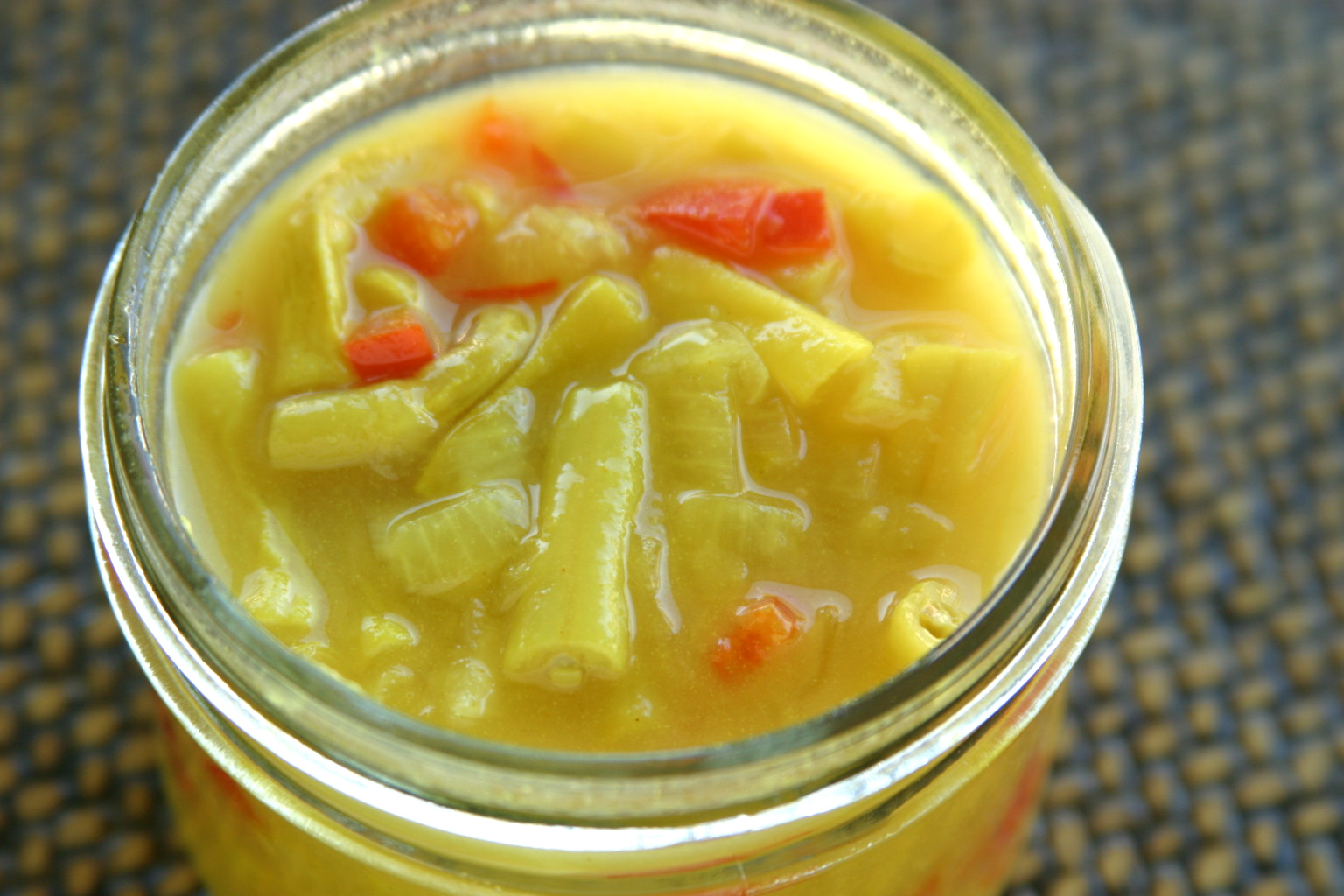
It is the season for putting away for the winter.  I bought some lovely fresh yellow beans at the farmer's market.  I love mustard beans, especially in this recipe.


I toss them with steamed baby potatoes for a low-fat and flavour packed potato salad.


Mustard Beans


2 lbs yellow beans, washed, trimmed and cut to 1 1/2" lengths

3 tablespoons of mustard powder

1/2 teaspoon tumeric

3 tablespoons pickling salt

white vinegar

water

flour

1/4 cup sugar

onions, finely chopped

1 red pepper, finely chopped


Mix the sauce ingredients and place on heat.  Bring to a boil.  Add the beans, onions and red pepper.  Bring back to the boil.


Process in water bath for 20 minutes for 250 ml jars.
reade more... Résuméabuiyad

Concord Grape Jam


It is that time of the year again!  I have been doing a lot of canning and will be sharing more recipes.  Today it was Concord Grape Jam.  I could have made beautiful clear jelly but I wanted a change.  This was a little fussy to make.  First, peeling grapes!  I eventually just squeezed and the innards popped out.  It was still a tad tedious though.  


But the results are wonderful.  The jam has somewhat of a floral flavour and aroma that you do not achieve when making the jelly.  I will be looking for some ideas on serving this.  Do you have any? 


Concord Grape Jam


Gourmet Magazine, October 2005


  • 5 lb Concord grapes, stemmed

  • 5 cups sugar

  • 3 tablespoons fresh lemon juice


Sterilize jars:

Wash jars, lids, and screw bands in hot, soapy water, then rinse well. Dry screw bands. Put jars on a rack in canner or deep pot and add enough water to cover by 2 inches. Bring to a boil, covered, then boil for 10 minutes. Remove from heat, leaving jars in water. Heat lids in water to cover by 2 inches in a small saucepan until thermometer registers 180°F (do not let boil). Remove from heat, leaving lids in water. Keep the jars and lids submerged in hot water, covered, until ready to use.


Cook jam:

Chill 2 small plates (for testing jam).


Slip skins from grapes and purée skins with 1 cup sugar in a food processor, then transfer to a 4- to 6-quart wide heavy pot. Stir in lemon juice, peeled grapes, and remaining 4 cups sugar and boil over moderate heat, stirring frequently and skimming foam, until pulp is broken down, about 20 minutes. Force jam through food mill set over a large bowl. Discard remaining solids. Return jam to pot and cook at a slow boil, skimming foam occasionally and stirring frequently as mixture thickens to prevent scorching, 35 minutes, then test for doneness.


To test jam, remove from heat, then drop a teaspoonful on a chilled plate and chill 1 minute. Tilt plate: Jam should remain in a mound and not run. If jam runs, continue cooking at a slow boil, testing every 5 minutes, until done, up to 25 minutes more.


Seal, process, and store jars:

Drain jars upside down on a clean kitchen towel 1 minute, then invert. Ladle jam into jars, leaving 1/4 inch of space at top. Wipe off rims of filled jars with a clean damp kitchen towel, then top with lids and firmly screw on screw bands. Put sealed jars on rack in canner or pot and add enough water to cover by 2 inches. Bring to a boil, covered, then boil 10 minutes. With tongs, transfer jars to a towel-lined surface to cool.


Jars will seal; if you hear a ping, it signals that vacuum formed at the top of cooling preserves has made lid concave. Remember that you may or may not be around to hear that ping (some jars make the sound after you remove them from water, and others in same batch may take a few hours); the important thing is for jars to eventually have concave lids. Preserves will thicken as they cool.


After jars have cooled 12 to 24 hours, press center of each lid to check that it's concave, then remove screw band and try to lift off lid with your fingertips. If you can't, lid has a good seal. Replace screw band. Put any jars that haven't sealed properly in the refrigerator and use them first.


reade more... Résuméabuiyad

Pressure Canning your Stews

I made this chunky chili yesterday in my new crockpot.  I cooked it for about 5 hours and it was very tasty.  But rather than eat it right away, I thought this might be a good chance to practice with my (also new) pressure canner.


If I had thought about preserving this stew in advance, I probably would not have fully cooked it before processing.  But since this was a brisket, the meat was still very firm.  So I thought I would give it a try.


I also had a liter of chicken broth in the fridge.  I also preserved it with the pressure canner.  The chicken broth would not take as long to process but I didn't want to go through this twice.  It is recommended that meat stews be processed for 90 minutes.  Chicken stock only requires about half that time.


I like the idea of preserving food for use later.  I can remember as a child, my mother would can chickens using the water bath method.  I loved the flavour of the canned chickens but there isn't a chance I would do that without using a pressure canner.  The risk for botulism is too high.


I have been canning with the water bath method for years - tomatoes (with lemon juice added), fruits, jams and jellies.  Having a pressure canner broadens the range of items that I can put away.  


I left about a 1-inch headspace and both jars lost a bit of liquid.  I was way more intent on being sure I didn't have an explosion or have the pot run dry so wasn't focussing much on the end product - not that I could do much about it anyway!


Have any of you done any pressure canning?  I would love to hear about the types of things that you have considered successful using this method.
reade more... Résuméabuiyad